
They were simply an integral part of getting things done for years. In small towns in India, you went there to print out a form, send an email, check train availability, or access websites that couldn’t load on your mobile. I still recall sharing a computer and waiting for the webpage to open while some people were watching videos at full volume around me.
Back then, I didn’t think much about privacy. I was more concerned with whether the printer had paper or the connection would disappear halfway through an application. A cyber café felt like a normal part of daily life.
My Phone Changed the Routine
The most important shift was the purchase of a smartphone capable of handling everything that previously took me to a café. Suddenly, it became possible to access emails, fill in forms, download documents, and make payments all while staying at home.
It wasn’t an easy habit to break. I also liked being in control of what I was doing. I didn’t have to worry about whether or not I’d logged out before leaving because the computer wasn’t mine to use, and it was used by at least 40 other people that day.
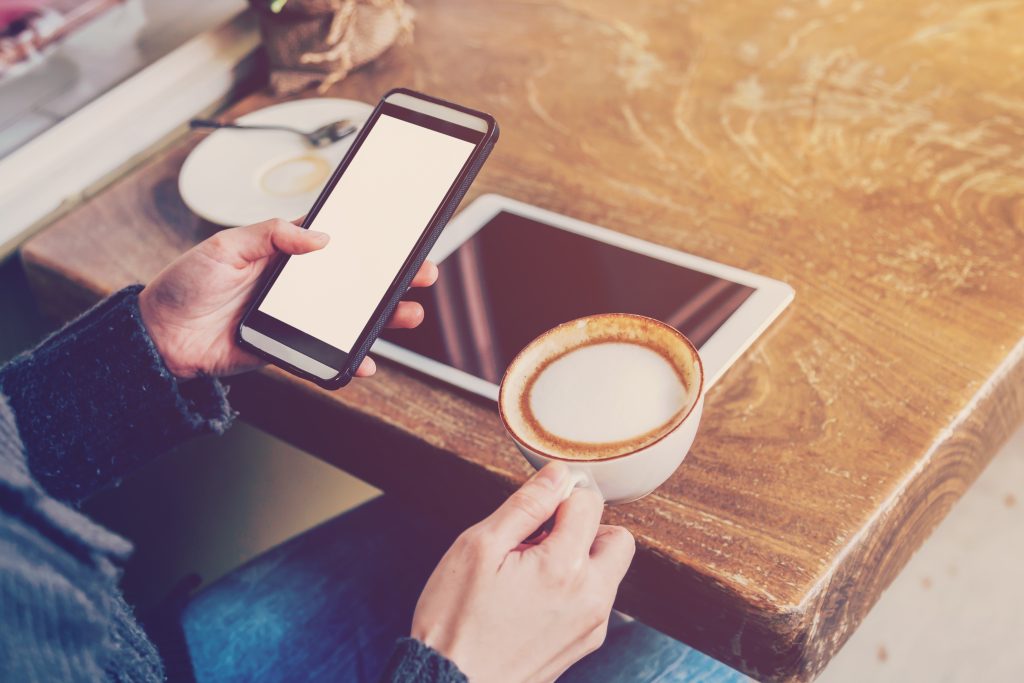
hand woman using smartphone in coffee shop and soft light with vintage filter.
Even today, cyber cafés can come in handy if you’re looking for a scanner or a printer. However, I found that there were quite a few things that could go wrong while using a stranger’s computer.
Shared Computers Made Me More Careful
A public computer isn’t necessarily unsafe just because it’s in a café. The problem is that you don’t know what happened on it before you arrived, or what the next person might do after you leave.
The café owner may not even be aware of what kind of software is loaded on the computer, or who last used the computer.
This is enough for me to be careful about logging into any important account. I don’t want my banking information, my messages, or my documents on a machine that I don’t own. Downloading a file from a public computer makes me uncomfortable.
There are also small details that can easily be overlooked. Have I logged out of all accounts? Have I deleted the downloaded file? Have I left any documents in my downloads folder? At home, these are much simpler questions to answer.
Public Wi-Fi Changed Things Too
The computer isn’t the only thing that made me rethink cyber cafés. Their Wi-Fi can also be a reason to be careful, especially when I’m handling something private.
These days, I usually rely on my own mobile connection when I need to do something sensitive away from home. But when I do use public Wi-Fi, I pay more attention to how I protect my connection. If I’m considering a VPN, I’d rather check a reliable information source first and compare what different services offer.
That doesn’t replace basic caution, though. I still avoid suspicious links, check website addresses, and think twice before entering sensitive information on an unfamiliar network.
I Still Use Cafés Sometimes
I haven’t completely stopped going to cyber cafés. There are still moments when one is the easiest option, such as when I need to print several pages, scan a document, or use equipment I don’t have at home.
Sometimes, I also appreciate having someone nearby who can help if I get stuck. In a small town, having these services in one place can save time when I need to get something done quickly.
The difference is that I don’t treat a shared computer as my personal device anymore. If I can use my own phone or laptop, I usually will. If I have to use a public computer, I keep sensitive tasks to a minimum and make sure I sign out before leaving.
A Different Way to Stay Connected
For me, the change isn’t really about being afraid of cyber cafés. It’s about having better options now. A smartphone and a personal internet connection give me much more control over my everyday online life. In a small town, that simple shift can make going online feel less like borrowing someone else’s space and more like using my own.
The post Why I Stopped Using Cyber Cafés in Small Indian Towns appeared first on Lakshmi Sharath.



0 Comments