
Walking through the streets of Bali, I noticed something simple, to many almost not worth mentioning: rice, flowers, and incense sit not only outside temples, but also in many shops and homes. As an Indian traveller, I felt moments that were strangely familiar, yet firmly Balinese. This feeling was strongest while exploring Goa Gajah and its Ganesha shrine.

It came to me that this attachment, but also respect, to ceremony is also expressed in Bali’s exquisite culinary treats. My experience of Balinese cuisine overlapped with my trip to Mauritius, but it would be unfair to class them as identical, or to suggest they lack distinct qualities that clearly separate the two.
Local Dishes to Try in Bali
Balinese food simply can’t be reduced to one signature dish, or even a ‘type’ of food. That’s because some recipes are tied to the everyday experience, the dish you have after working in the office, or before a long day working in the fields. Others are linked to celebrations, to particular events in a family’s trajectory, once again harking back to ceremony.
If you want to get a sense of what Balinese people eat, a local culinary experience, I recommend going to a warung, a small family-owned business, stripped of all pretence, looking closer to what one would assume is a school cafeteria, but in reality offers some of the best foods I have ever tasted.
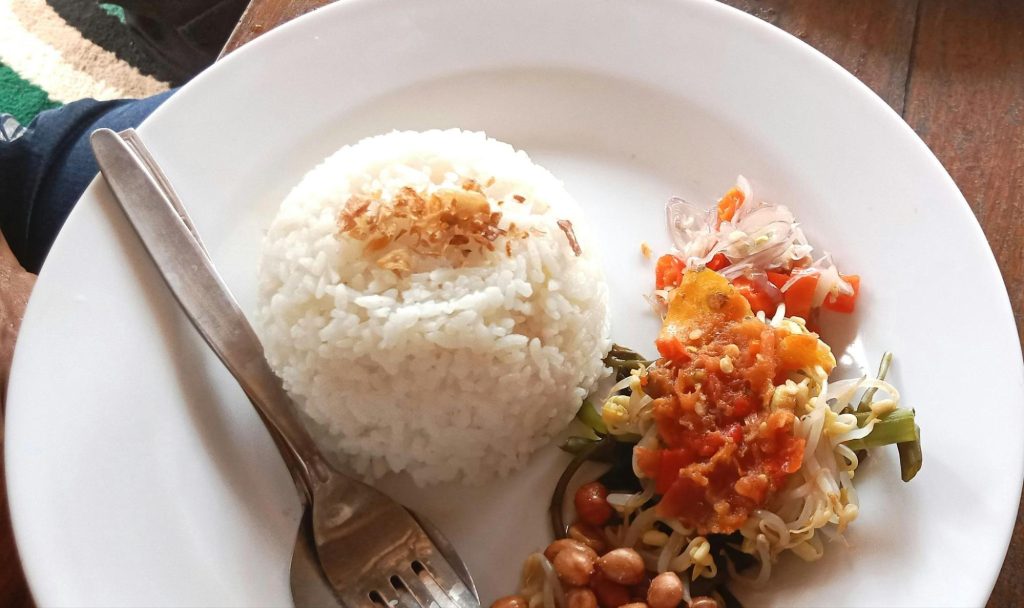
Nasi Campur
This is a must-try in my book, literally a mixed rice plate, but this short explanation does not do it justice. Anchored in steamed rice, small portions of vegetables, sambal, tempeh, and (for me, as a vegetarian) delicious tofu.
The beauty of this dish is that every warung has its own unique combination; you will not find two that are the same. A younger person told me this leads to a case of ‘Nasi Campur FOMO’, and once they explained the term, I very much agreed!
Babi Guling
This is one of Bali’s best-known dishes, and as a vegetarian, it’s never going to be on my list. But my fellow travel companions from Melbourne raved about it for days, so it would feel wrong not to include Babi Guling.
Babi Guling is a roast suckling pig, but what sets it apart are the traditional Balinese spices used to season the dish. You will find this delicacy in plenty of specialist warungs and markets.
Lawar
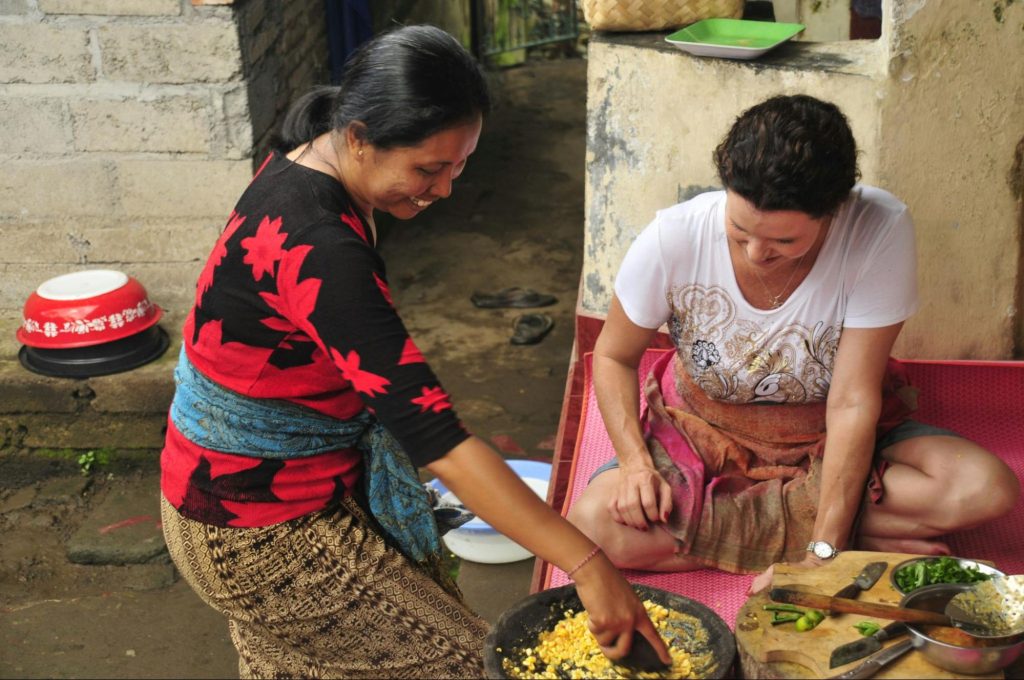
This dish is traditionally very meaty, but these days, plenty of vegetarian options are available too. The original version of lawar combines chopped vegetables with meat (e.g. minced meat) or seafood of choice, combined with an array of spices and grated coconut.
You can also find versions made with young green jackfruit (a traditional variant) or even papaya. To be honest, the spices make or break this dish, not necessarily the vegetables or protein.
Jukut Urab
Now, with Jukut Urab, you get a mixture of perfectly cooked vegetables (not too soggy, with just the right level of crunch) and seasoned grated coconut, and it just tastes extremely fresh, healthy even.
The beans and bean sprouts were my favourite veggies in the one I had, but my friend raved about her spinach version. The dish is also not too heavy, which can be a good counter to the rich foods you will often find in Bali.
Sambal Matah
This isn’t so much a dish, but a way of life. It belongs in any conversation about food in Bali, as it can turn a simple plate of rice and tofu into one of the most delicious dishes you’ve ever tasted.
Built around shallots, chilli, and lemongrass, Sambal Matah is technically ‘just’ a condiment, but it takes something basic to another level.
Bali Street Food and Night Markets
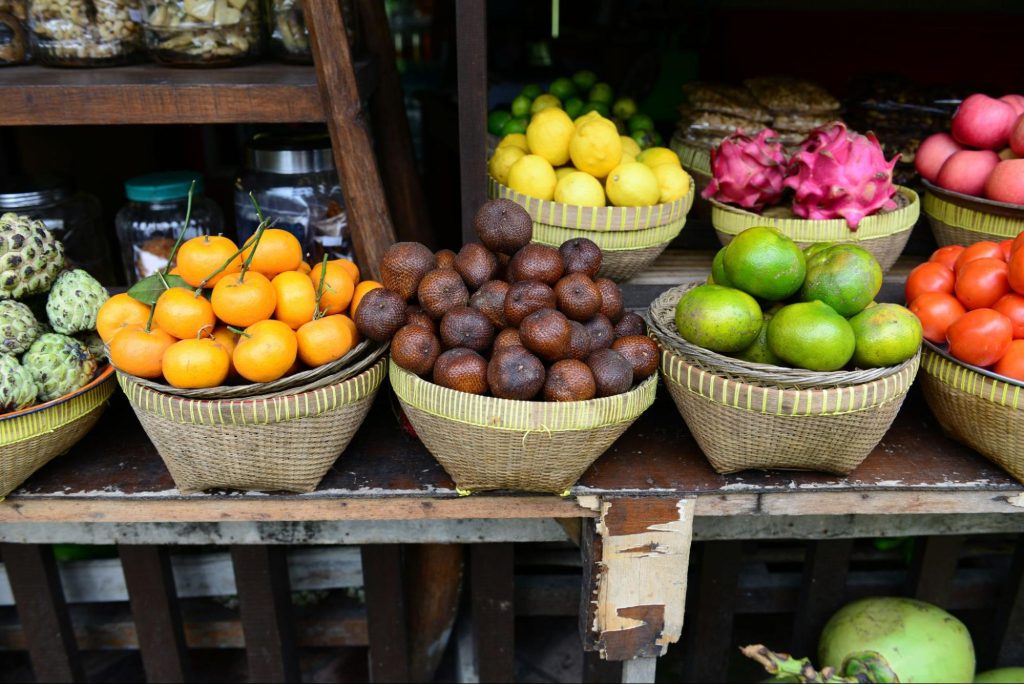
If the traditional warung shows one face of Bali food, markets show another. You will find a noisier ambience, a cacophony of market sounds, true, but it’s always full of character.
Word of warning: your senses will be going through it if you go to the right local market. Push through, because you will be rewarded. It’s not polished, yet it’s real. Soon, you will love it.
Street Foods to Look For
There is so much in your average market, it’s difficult to recommend a handful of dishes. But if this is your first time, there are a few that are on the must-try list:
Nasi Jinggo. Traditionally wrapped in banana leaf, this small portion of rice comes with delicious accompaniments, always varied, and every time absolutely delicious.
Bakso. Indonesia’s meatball equivalent, served in broth with noodles. I couldn’t partake, but my friend certainly looked impressed in my photos!
Sate. Usually served with chicken or pork, sate (or satay) is a delicious dish of grilled skewers, often served with peanut sauce; the veggie equivalent uses tempeh or tofu.
Night Markets
What I love about markets is that they capture the essence of everyday life, revealing far more about the local population than the main shopping streets or the gourmet restaurant experience.
It’s not what you see in the tourist board advertisements, but it’s what really makes the experience authentic.
Gianyar Night Market
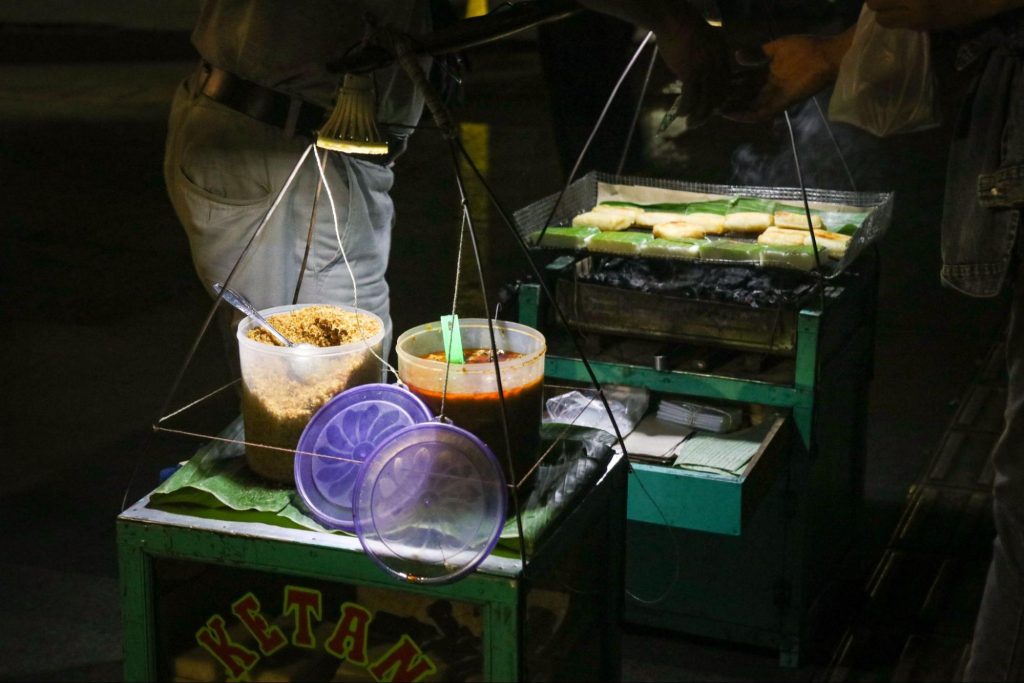
This market is easy to reach from Ubud with a private driver, and it’s also one of the most famous. You will find small stalls and a traditional, market-driven experience instead of gentrified tourist food halls.
It’s very busy on weekends, as it’s popular with locals, so I recommend going mid-week in particular. I spent about half an hour wandering and deciding before committing to some Nasi Jinggo! With my driver parked up nearby, there was no need to rush.
Sindhu Night Market, Sanur
Don’t go here during the day, as it serves as a produce and ‘everyday shopping’ type of market. You will find lots of locals, but few options for tourists looking for ready-to-eat delicacies.
At night, it’s a different story. Fried snacks, traditional dishes, and even treats for those with a sweet tooth. I was staying at a hotel in Sanur, so it made sense to go here without crossing the island, which, with Bali’s traffic, can take far longer than the map suggests.
Kereneng Night Market, Denpasar
This market has pure local vibes, I don’t think I ever saw another tourist while I was there. Alongside the daily activities you will find at any other market in Bali, Kereneng Night Market also features an assortment of food stalls and local delicacies.
Personally, I recommend going for the bakso, noodles, satay, and small snacks. Committing to a full meal from a single vendor is almost always a mistake, as just a stall away there will be something else to entice you.
Sweet Treats to Try in Bali
The sweeter side of Balinese food- that’s the vegetarian’s dream. Rice, flour, coconut, palm sugar- the staples in most recipes, all resulting in, well, having to buy clothing a size up before leaving the country!
Klepon
This is probably my favourite on the list, so it goes right at the top, suitably so. It’s a small, soft ball traditionally made with glutinous rice flour and coated in grated coconut.
But as they say, it’s the inside that counts. The liquid palm sugar will feel like a flavour explosion, best eaten whole unless you want the contents to decorate your dress.
Dadar Gulung
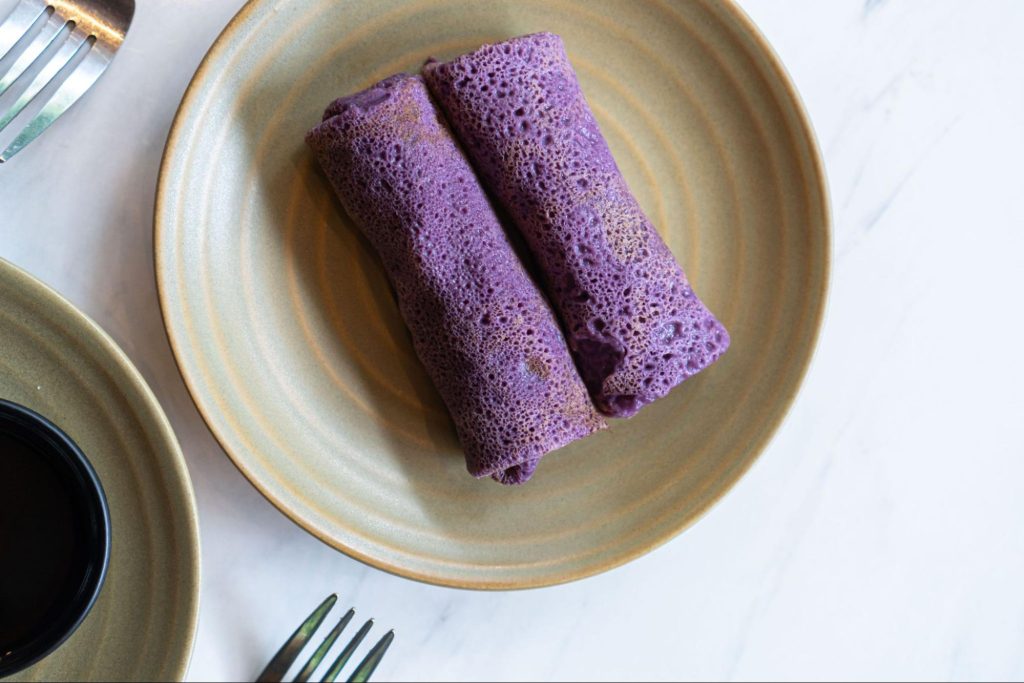
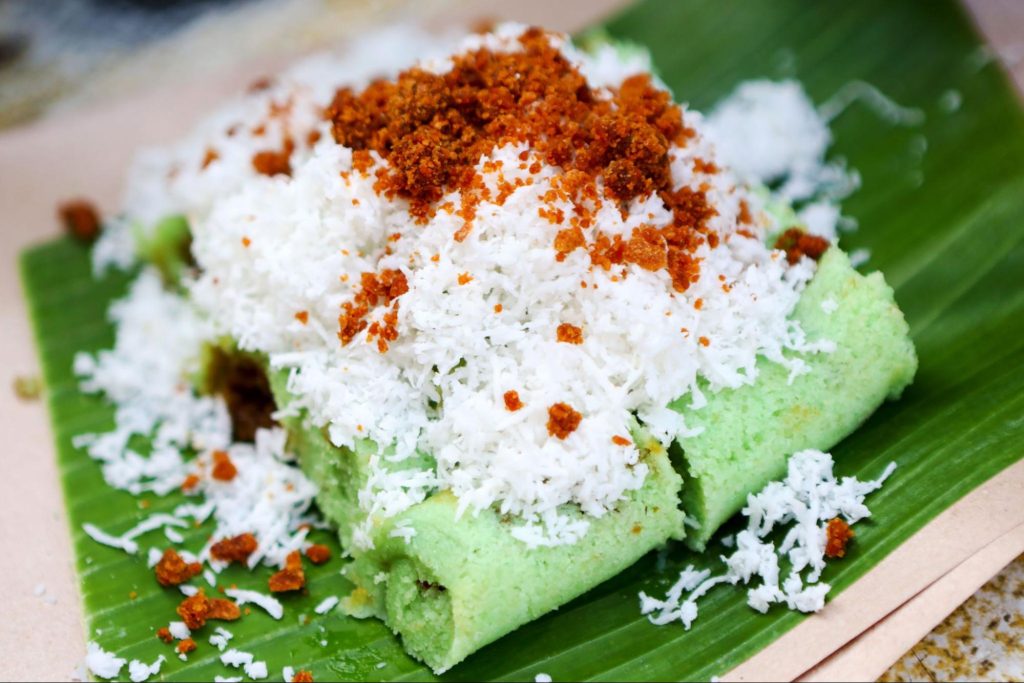
These are green rolled pancakes with grated coconut and palm sugar as a filling, but the texture is what makes the dish.
Oh, and you cannot forget the aroma of the pandan leaves used in Dadar Gulung, creating an olfactory experience that pairs beautifully with the treat’s sweet, textured taste.
Es Campur
When you are in Bali, you are in a permanent state of heat. It can also get very humid, and it can be quite uncomfortable. The locals have come up with the perfect solution: es campur.
It’s a colourful iced dessert or drink that combines ingredients like fruit, jelly, and coconut. Recipes vary widely between vendors, which is part of the magic. No two are the same.
Food Costs (and How to Pay!)
Compared to Europe or the United States, food in Bali will undoubtedly feel very inexpensive. Costs still vary significantly, depending on where you eat. Street snacks and simple market meals will be incredibly cheap compared to what you are used to, and even classic tourist restaurants aren’t extortionate.
To pay for food, you need small rupiah notes. For purchases at market stalls and many smaller restaurants, your bank card will often not be an option. My friends from Melbourne had ordered their rupiah before leaving Australia, which turned out to be a smart move.
I recommend having a small amount, even if you plan to use the ATM at the airport or at a local bank, since sometimes they’re not working. And it’s just easier and best for peace of mind to at least have a small buffer when you land.
The Flavours I Would Take Home
Those small offerings of rice, flowers, and food, whether at a market or from a street vendor, or even a temple, are what bring the story right back where it started.
Bali’s food is not separate from its temples, nor is it detached from ceremony, because it’s part of daily ritual, overlapping with every activity of the common person. For me, food has become another way to remember the island, like these Bali experiences I would never want to miss.
The post Local Dishes, Street Food, Sweet Treats to Try in Bali appeared first on Lakshmi Sharath.



0 Comments